
Walk into any home, and textiles are usually among the first things you notice. Curtains, bed linen, cushions, rugs, upholstery and table linen all contribute to how a space looks and feels. This is why Home Textile is no longer seen simply as a household category. It has become an important part of interior design, lifestyle and personal expression.
The industry is changing alongside the way people live. Consumers are paying more attention to materials, craftsmanship, comfort and sustainability, while manufacturers are exploring new fibres, finishes and technologies.
The global home textile market is estimated at USD 145.29 billion in 2026 and is projected to reach USD 197.28 billion by 2031. Asia Pacific remains both the largest and fastest-growing regional market. Trade platforms such as Heimtextil in Frankfurt have therefore become important places to understand what buyers want and which ideas could shape the future of the industry.
1. How Home Textile Has Become Part of Modern Living
There was a time when home textiles were chosen mainly for practical reasons. A bedsheet had to be comfortable, a curtain had to cover a window and a towel had to be absorbent. Today, the choices are much broader.
People want their homes to reflect their personalities. A bedroom might feature washed linen in muted tones, while a living room could combine textured upholstery with printed cushions and handwoven rugs. Even smaller details such as napkins and table runners can change the character of a room. This has opened up opportunities for home textile manufacturers. Instead of producing only standard products, many now work with a wider range of fibres, constructions, finishes and designs. Cotton and linen remain important, while recycled fibres, wool, regenerated materials and technical fabrics are also gaining attention.
Home renovation and décor are adding further momentum. Consumers are spending more on making their homes comfortable and visually appealing, whether furnishing a new property or refreshing an existing one. Online shopping has changed the market as well. Consumers can discover textile brands from across the world without visiting a physical store. For businesses selling home fabric, strong design, presentation and product storytelling have consequently become more important.
2. The Home Textile Trends to Watch
However, the newest home textile trends do not focus only on colour combinations and patterns. The trends are associated with people’s way of life.
Firstly, sustainability still plays an important role. Nowadays, consumers tend to pay attention to what kind of material they use and where it comes from. They are interested in the production process and the durability of a product. Thus, natural fibres, recycling and more sustainable manufacturing become crucial in such a context.
Secondly, texture also gains popularity. The visible weaving, embroidering, quilting and tactile fabric create a rich atmosphere of any interior space. It is especially characteristic of luxury home textiles since the quality of touch and the usability of a product become extremely important here.
Thirdly, personalisation also appears as a new trend. Instead of buying everything from one collection, people tend to combine colours, patterns and materials. A hand-woven cushion can be used together with a printed throw and plain linen curtains with a textured sofa. Finally, nowadays, fabrics are expected to perform certain functions. In order to control temperature, moisture, light or sound, performance textiles are becoming more relevant. The line between the decorative and functional textiles gradually disappears.
3. Why Heimtextil Frankfurt Matters
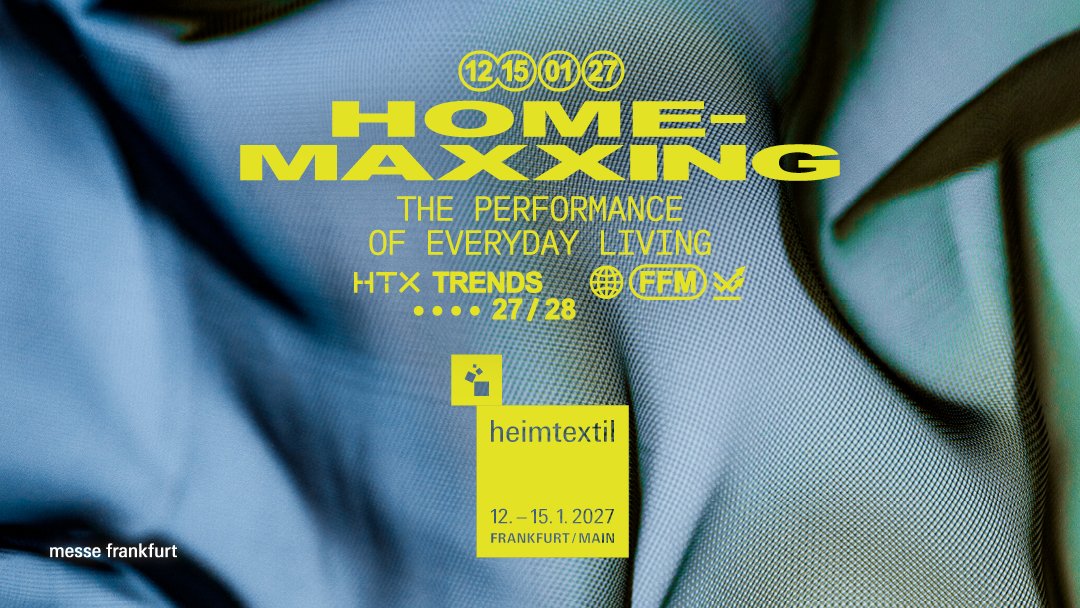
The Heimtextil Frankfurt fair is definitely among those important events which any professional in the international home textile industry must attend. The fair is organised by Messe Frankfurt. The next Heimtextil event will be held in 2027, namely on January 12-15, 2027, in Frankfurt. The fair focuses on home and contract textiles and textile design such as bed, bath and living textiles, decorative fabrics, hospitality and interior applications.
In 2026, Heimtextil had 48,000 visitors from 133 countries, showing the international presence of the fair. Global home areas of Heimtextil are especially important for manufacturers and buyers, as they connect international manufacturers with companies searching for products in the fields of bedding, bath, kitchen, window textiles, fabrics and décor.
However, Heimtextil’s importance goes beyond numbers. This fair gives an opportunity to learn about the trends in different markets all at once. A manufacturer finds a new buyer, a designer discovers a new material and a brand finds out new colours, textures and trends.
4. What are Heimtextil Trends 27/28? Says About the Future
The Heimtextil trend programme is another feature that makes the exhibition so attractive. The theme for 2027 is “Home-Maxxing – The Performance of Everyday Living”.
This concept is connected with the fact that people expect their homes to do more than ever before. They should provide comfort and relaxation; besides, they can act as offices, entertainment centres and wellness zones. That is why it becomes increasingly necessary to require textiles to have different qualities. Heimtextil says that textiles can affect light and sound and purify air as well as create visual and tactile impressions of a space.
There are three themes of 2027 trend direction: Staged Competence, Inside, Out and Hyper Presence. Staged Competence is concerned with technical performance through the use of specific materials, colours and constructions. Inside, Out brings seams and fasteners into design. And finally, Hyper Presence takes a sensual approach; it deals with natural materials, ageing and tactile impression of textiles.
All these trends can become useful for Fabric Home Decor in the future. People might start to expect from one product at once the qualities of beauty and performance. Besides, Heimtextil will cooperate with Patricia Urquiola in creating 2027 Trend Space.
5. Where Is the Home Textile Industry Headed?
The future of the industry will not necessarily be defined by one particular material, colour or design style. Instead, it will be shaped by changing lifestyles, technology, sustainability and a growing interest in thoughtful design.
For home textile manufacturers, adaptability will be important. Buyers are looking for products that are attractive, practical and responsibly made. Manufacturers that can bring these qualities together will have an opportunity to stand out. There is also room for smaller, design-focused businesses. A specialised Fabric House can offer carefully selected materials and develop a distinct point of view rather than competing purely on volume. Similarly, luxury home textile brands can build their identity around craftsmanship, quality and material knowledge.
Asia Pacific is likely to remain important because of its large manufacturing base, established textile supply chains and growing consumer market.
Ultimately, the next stage of the industry will not simply be about producing more. It will be about understanding what people want from the textiles they live with every day.
Conclusion
There are changes happening in the home textiles industry in parallel to the changes taking place in the homes. Comfort, aesthetics, sustainability, and performance are becoming synonymous.
Consumers are seeking textiles which not only look good but also make them comfortable and provide a natural blend in their lives. Simultaneously, companies are being compelled to think more critically about their fabrics, production and value.
That is why the Heimtextil type of expos is becoming even more significant. They connect the various players in the industry and give an insight into the materials, designs, and innovations which may define its future. With interiors turning out to be more personal and versatile, textiles will keep playing a vital part in them. Successful products are expected to be those which combine great design along with comfort and functionality.
FAQs
1. What is Home Textile?
Home Textile is textile products which are being used in homes or interior space. These products consist of bed linen, towels, curtains, cushions, rugs, table linen, kitchen textiles, upholstery and other decorative fabrics.
2. Who are Home Textile Manufacturers?
Home Textile Manufacturers are the companies which manufacture fabric or any textile product used for homes, hotels or any other interior space. The products may include bedding, towels, curtains, upholstery and any other decorative textiles.
3. What is Heimtextil Frankfurt?
Heimtextil Frankfurt is the international trade show which includes home and contract textiles and textiles design in it.
4. What are the major trends in home textiles?
Sustainability, natural fibres, tactile, personalisation, performance and comfort & wellness-based textiles and products are some of the major trends in home textiles.
5. What is the future of the home textile industry?
In the future of the home textile industry, there will be increasing emphasis on sustainability, performance, craftsmanship and personalised designs. This could also open up new doors for Home Fabric, Luxury Home Textile and Fabric Home Decor companies.

