
Introduction:
The fashion industry is changing rapidly as consumers become more conscious about sustainability, ethical sourcing, and product authenticity. Today’s buyers are no longer interested only in trends and pricing; they also want to know where their garments come from, who made them, and whether brands are genuinely following responsible practices. However, fashion supply chains are often extremely complex, involving multiple countries, suppliers, factories, and logistics providers. This makes it difficult for brands to maintain complete visibility over production processes. As concerns around counterfeit products, unethical manufacturing, and greenwashing continue to grow, blockchain in the fashion industry is emerging as an important solution. Blockchain technology creates secure and transparent digital records that help brands track products throughout their journey. From raw material sourcing to retail shelves, blockchain is helping fashion companies improve trust, accountability, and sustainability across global supply chains.
1. Why Blockchain is Becoming Important in Fashion
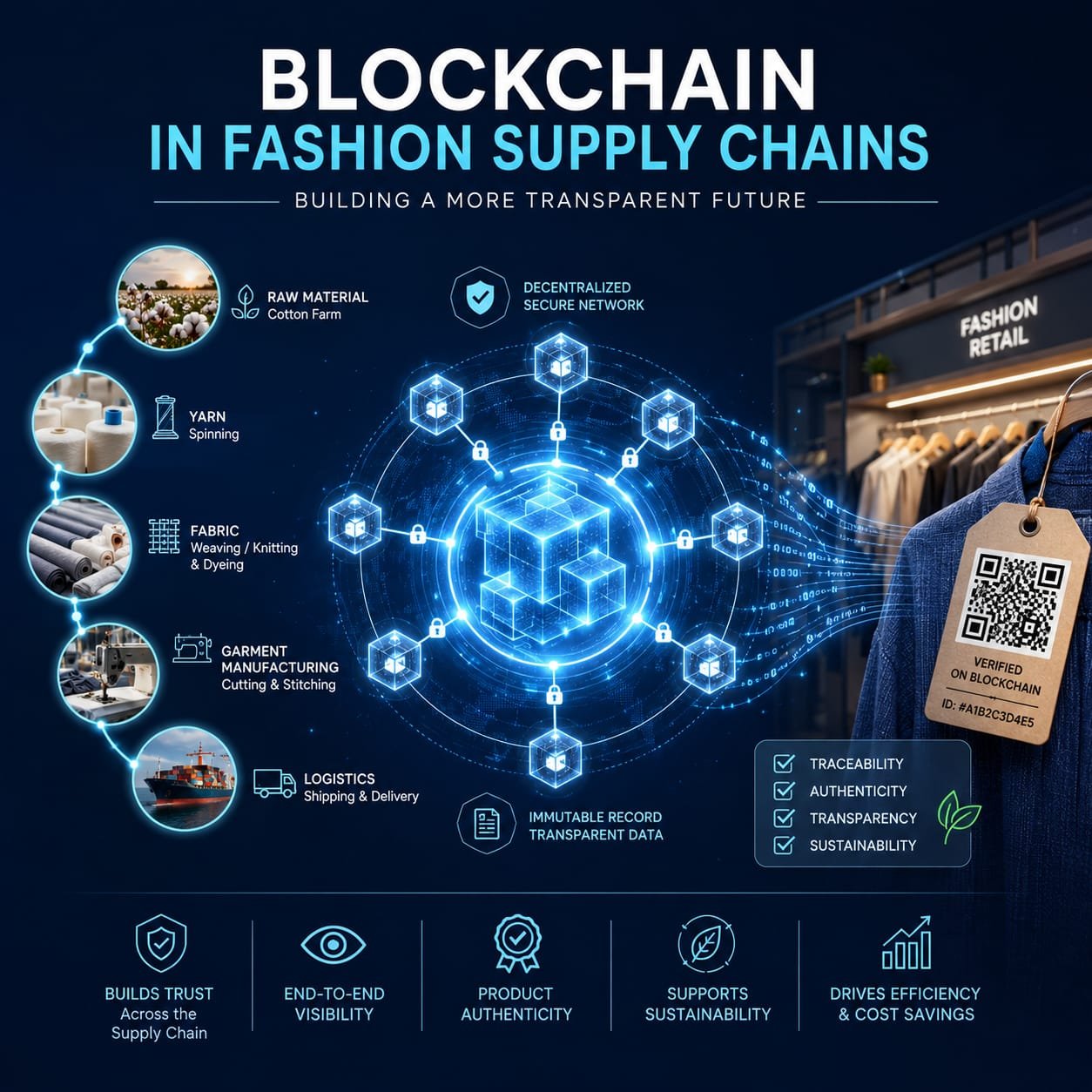
Blockchain technology works like a secure digital ledger where information cannot easily be changed once it is recorded. In the fashion industry, this allows brands to document every stage of a product’s journey, including sourcing, manufacturing, transportation, and distribution. The growing demand for supply chain transparency is one of the biggest reasons behind blockchain adoption in fashion.
Consumers increasingly expect proof regarding sustainability claims and ethical sourcing practices rather than relying only on advertisements or labels. Blockchain gives brands the ability to provide verified product histories through QR codes or digital product IDs.
Luxury brands have been among the first to adopt this technology. Louis Vuitton and Prada became part of the Aura Blockchain Consortium, which helps customers verify product authenticity digitally. Similarly, LVMH has invested in blockchain-based authentication systems to strengthen customer trust and reduce counterfeit circulation. As the global fashion market becomes more digitally connected, blockchain is gradually becoming a valuable tool for improving both transparency and consumer confidence.
2. Improving Transparency Across Fashion Supply Chains
Fashion supply chains are often highly fragmented, involving multiple manufacturers, suppliers, dyeing units, and logistics providers spread across different countries. This complexity makes it difficult for brands and consumers to track the exact journey of a garment. With fashion supply chain transparency, blockchain helps create a shared and traceable system where information can be securely updated and accessed across the supply chain. Since the records cannot easily be altered later, brands gain more reliable visibility into sourcing and production activities. Several fashion companies are already exploring blockchain-supported traceability systems. H&M has shown interest in improving transparency around sustainable sourcing and manufacturing practices. Likewise, Patagonia continues to focus strongly on ethical sourcing and supply chain visibility through digital tracking initiatives. Blockchain can also help reduce paperwork delays, improve communication between suppliers and brands, and strengthen accountability throughout production networks. As global sourcing operations continue expanding, digital technologies like blockchain are expected to play a much larger role in the future of the textile and apparel industry.
3. Blockchain and Sustainable Fashion
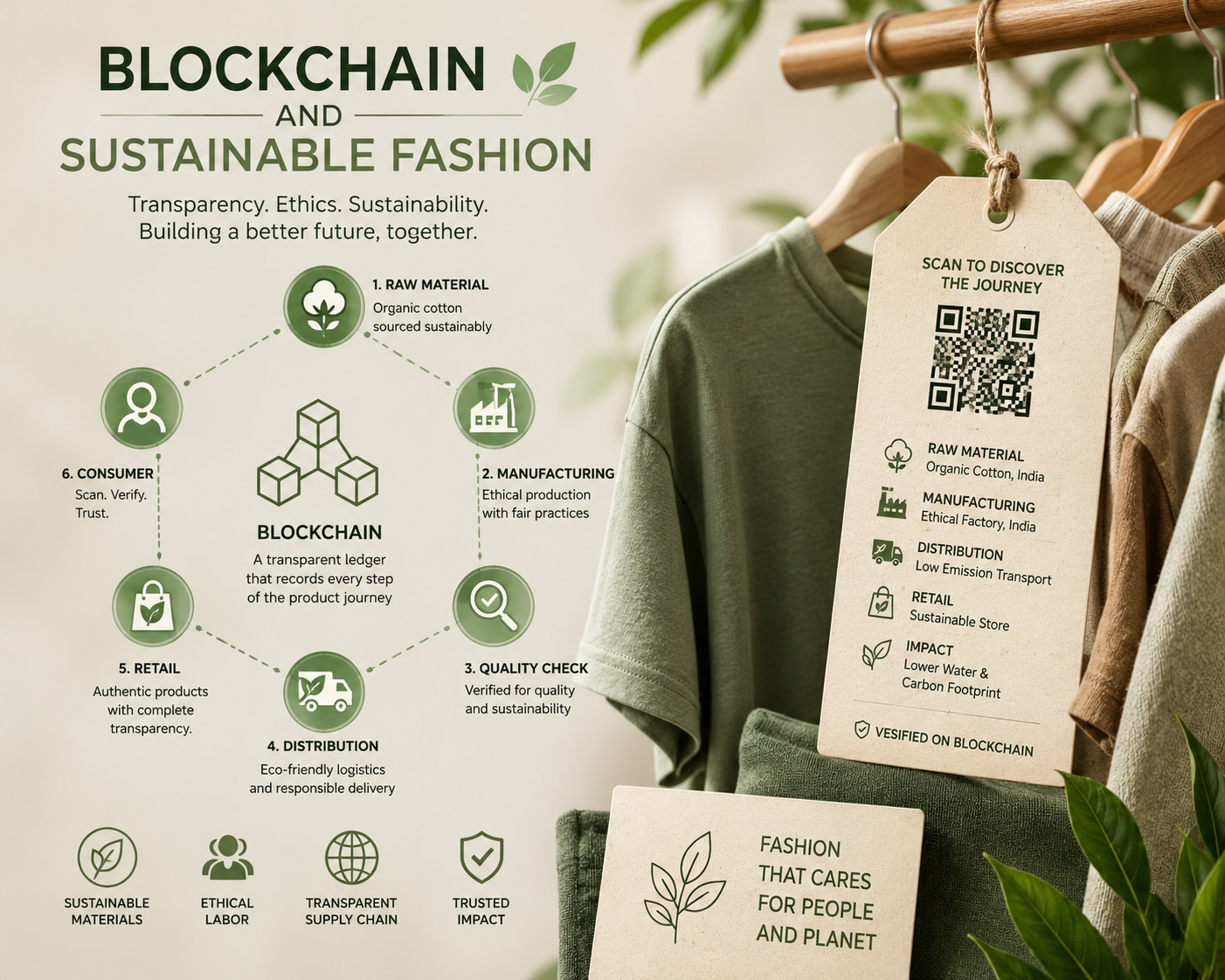
Sustainability has become one of the biggest priorities for the fashion industry. Consumers are increasingly supporting brands that focus on ethical production, environmentally responsible sourcing, and reduced waste. At the same time, brands are facing pressure to provide stronger proof regarding their sustainability claims. This is where sustainable fashion technology becomes highly relevant. Blockchain helps create verifiable digital records for material sourcing, recycled fibre usage, carbon emissions, water consumption, and ethical labour standards. Since the information is securely stored, it becomes harder for companies to make misleading sustainability claims. Stella McCartney has consistently promoted sustainable luxury fashion and explored technologies that improve material traceability. Similarly, Adidas has worked on initiatives involving recycled materials and greater transparency within product sourcing. Blockchain is also becoming important for the growing circular fashion economy. As resale and recycling markets expand, blockchain-based digital product passports can help track garments throughout their lifecycle. Consumers can access details about material composition, resale ownership, and recycling instructions, helping create a more sustainable fashion ecosystem.
4. Fighting Counterfeit Fashion Products
Counterfeit fashion products continue to create major challenges for luxury and premium brands worldwide. Fake products damage brand reputation, reduce revenues, and weaken customer trust. Traditional authentication methods such as labels and invoices can often be copied, making verification difficult. Blockchain technology offers a stronger solution through digital authentication systems. Each product can receive a unique digital identity linked to blockchain records containing manufacturing and ownership details. Customers can then
scan a QR code or digital tag to verify authenticity. Luxury brands such as Gucci and Burberry have shown increasing interest in digital authentication technologies to strengthen trust within luxury markets. The importance of digital product passports in fashion is expected to grow significantly as online shopping and luxury resale platforms continue expanding. Blockchain-backed verification systems can make it easier for consumers to confidently purchase genuine products while helping brands protect their identity and reputation.
5. The Future of Blockchain in the Fashion Industry
Although blockchain offers many advantages, large-scale adoption across the fashion industry will still take time. Implementing blockchain systems requires investment, technical infrastructure, and collaboration across global supply chains. Many smaller suppliers may still lack access to advanced digital systems. There are also challenges related to scalability and data accuracy. Blockchain systems can only provide reliable information if the original data entered into them is accurate and verified properly. Despite these limitations, industry experts believe blockchain adoption will continue increasing as transparency and sustainability become more important for both brands and consumers. The future of blockchain for fashion supply chains could include automated smart contracts, carbon footprint tracking, AI-integrated traceability systems, and advanced product lifecycle management. As digital transformation accelerates across the fashion sector, blockchain is likely to become a key part of responsible and transparent supply chain management.
Conclusion:
Blockchain technology is gradually transforming the global fashion industry by improving transparency, sustainability, and product authentication. From luxury fashion houses to major apparel retailers, brands are increasingly exploring blockchain-backed systems to address concerns regarding unethical sourcing, counterfeit products, and environmental accountability. The growing demand for ethical fashion, transparent sourcing, and sustainable production practices is encouraging the industry to adopt more reliable digital solutions. While widespread implementation may still evolve over time, blockchain has already shown strong potential in building greater trust between brands and consumers. As fashion continues moving toward a more transparent and sustainable future, blockchain is expected to play an important role in reshaping how products are sourced, tracked, and verified across global supply chains.
FAQs
1. What is blockchain technology in fashion?
Blockchain technology in fashion is a secure digital system used to track and verify products across the supply chain.
2. Why is blockchain important for fashion supply chains?
Blockchain improves transparency, product traceability, and accountability throughout the supply chain.
3. Which fashion brands are using blockchain?
Brands such as Louis Vuitton, Prada, Adidas, and Gucci have explored blockchain initiatives.
4. Can blockchain reduce counterfeit fashion products?
Yes, blockchain helps brands provide secure digital authentication for products, reducing counterfeit circulation.
5. How does blockchain support sustainable fashion?
Blockchain helps brands verify ethical sourcing, recycled materials, and sustainability claims through secure digital
records

